
 Français
Amaury des Jamonières is responsible for industrial partnerships at CEA Pays de la Loire, particularly those linked to the decarbonisation of the maritime sector. He tells us about the special features of the Nantes site, its unique experimental facilities and the dynamic partnerships that have made the region a pioneer in hydrogen innovation.
What role does the CEA play in hydrogen research and development?
The CEA is a public research and innovation organisation whose mission is to develop breakthrough technologies and transfer them to industry. It has seven regional facilities spread across France, each with its own area of specialisation. The center in Nantes focuses on decarbonising maritime transport. We address the specific challenges of adapting energy systems to the constraints of the maritime environment, with hydrogen as a key strategic development vector.
What are the distinctive features of the Nantes centre and its Sea’nergy platform?
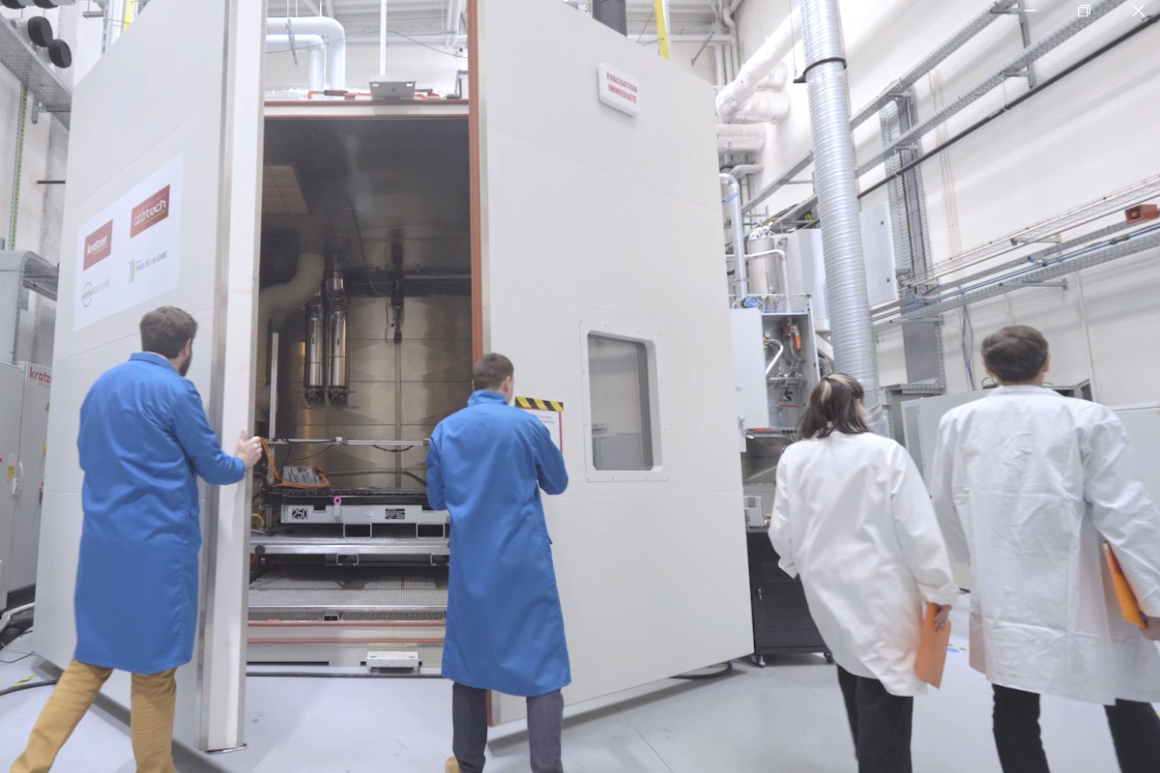
Our Sea’nergy platform is dedicated to the decarbonisation of the maritime sector. It brings together a range of equipment that is unique in Europe for simulating and replicating the real operating conditions of onboard ship energy systems (batteries, fuel cells, etc.). This includes:
- a 55 m3 climatic chamber for testing large-scale equipment under conditions such as extreme temperatures, hygrometry, and salt pollutants, coupled with a high-power electrical bench (800 kW);
- a large-scale salt mist (8 m3) and a fatigue-corrosion machine;
- an X-ray inspection tool for large components;
- more recently, a wave test rig, simulating the pitching of a ship to test equipment under dynamic conditions.
These experimental test facilities are accompanied by a wide range of digital tools, including AI technologies, enabling simulations and the development of digital twins, as well as the prototyping of modular electrical architectures for designing multi-purpose boats. These facilities can also be used to solve other challenges, such as simulating polluted environments.
What human resources are available at the Nantes site?
The centre brings together a team of 18 experts with rare and specialised skills, including methodology for designing and qualifying energy systems for maritime applications, hardware-in-the-loop (HIL) modelling, and energy hybridisation. This ability to integrate both digital and physical components is essential for testing operational solutions in complex environments such as the maritime sector.
How is the hydrogen market developing, particularly in the maritime sector?
We’re entering a pivotal phase. After several years focused on R&D, some technologies are now reaching maturity. The focus is shifting to certification and marketing. This is especially true for PEM (Proton Exchange Membrane) fuel cells, where the technology is already well advanced. Other technologies, such as SOFCs (Solid Oxide Fuel Cells), which offer greater fuel flexibility, are currently being developed.
Meanwhile, new hydrogen-based fuels such as synthetic methanol (e-methanol) are emerging to overcome storage constraints. The aim is not to replace diesel overnight, but to move towards low-carbon energy mixes tailored to different fleet segments and uses.
What are the advantages of Atlantic France for developing these hydrogen projects?
The region boasts an exceptionally dense and complementary ecosystem:
- academic players such as Nantes University, Ecole Centrale de Nantes, Arts et Métiers d’Angers and IRT Jules Verne;
- manufacturers covering the entire value chain, from components to systems, technology suppliers, integrators, naval architecture firms, design offices, and shipowners. ;
- a diverse range of players, from innovative SMEs to major industrial groups, offering a wide range of perspectives to be formed and enabling the exploration of diverse technological and operational scenarios.
This industrial and academic ecosystem, of which the CEA is an integral part, benefits from the active support of the Atlantic France, acting as a key lever for accelerating innovation within the region’s industrial landscape.